
BIEBERPIRATEN
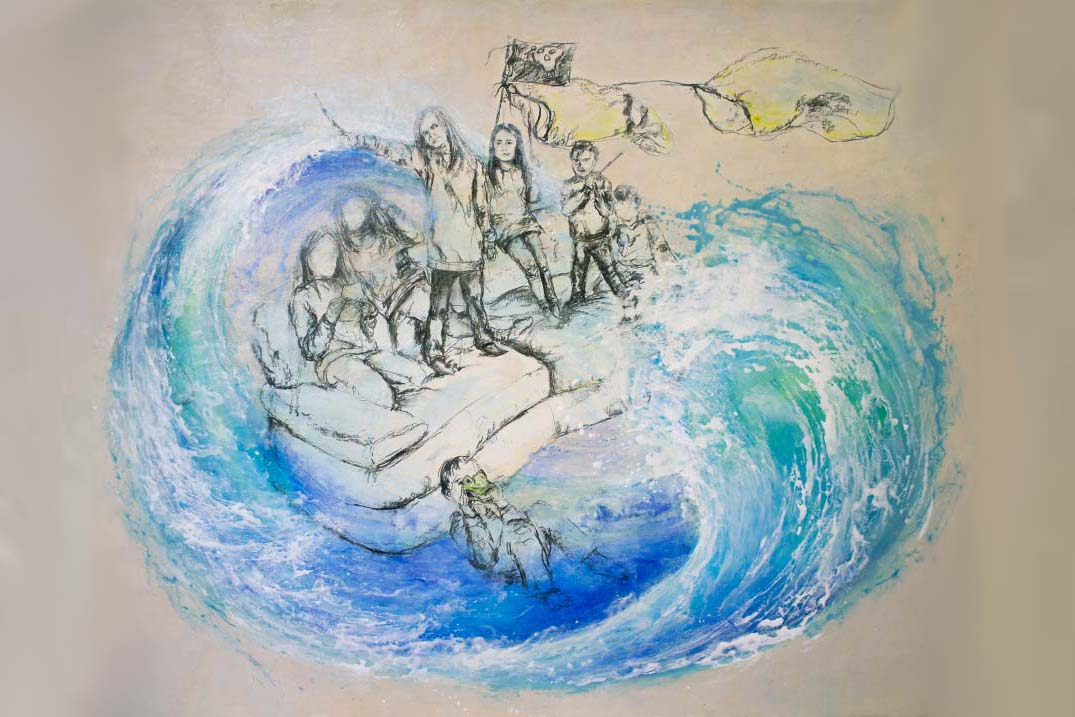
Acrylfarbe und Kohlezeichnung auf Leinwand, 130 x 170 cm, 2025
About the Work
The painting emerged from an immediate impulse: while observing children, it became apparent how much they love playing pirates. In this play, they become symbols of fundamental human drives the urge for freedom, the exploration of risk, and the engagement with power and moral ambiguity. Pirates act violently, steal, fight, and cross boundaries, yet in the game, this occurs without conscious reflection on right or wrong.
In this context, the dynamic evokes Hannah Arendt’s reflections on the “banality of evil”: actions that take place without deliberate thought or conscious intention can nonetheless produce moral tension. In pirate play, these forces appear early, spontaneously and playfully, yet they are not harmless.
Historically and philosophically, the painting engages with enduring questions about freedom, morality, and the conditions of human action. Thinkers from Rousseau to the Romantics, and Arendt in the 20th century, have reflected on the interplay of instinct, societal norms, and ethical responsibility. Pirates serve as an archetypal symbol of rebellion, creativity, self-determination, and simultaneously destructive violence. By casting children as symbolic carriers of these forces, the painting highlights how early experiences of play already mirror societal questions of norms, risk, and responsibility.
The work operates on multiple levels: as a direct observational impulse, as a psychological study of human drives, and as a societal reflection on power, freedom, and moral agency. Through color, composition, and form, it invites viewers to contemplate the tension between freedom and security, risk and responsibility, and the forces that shape us long before we consciously recognize them.
Exhibitions
2025 Storytelling, SALON SALDER, Salzgitter, GER
2025 HONIGSCHLEUDER, Lichtbunker, Hannover, GER